Program, subject, and interpretations
The Stanza della Segnatura was the first of the rooms to be decorated, and The School of Athens, representing philosophy, is believed to be the third painting to be finished there, after La Disputa (Theology) on the opposite wall, and the Parnassus (Literature).
The School of Athens is one of a group of four main frescoes on the walls of the Stanza (those on either side centrally interrupted by windows) that depict distinct branches of knowledge. Each theme is identified above by a separate tondo containing a majestic female figure seated in the clouds, with putti bearing the phrases: “Seek Knowledge of Causes”, “Divine Inspiration”, “Knowledge of Things Divine” (Disputa), “To Each What Is Due”. Accordingly, the figures on the walls below exemplify philosophy, poetry (including music), theology, and justice.[7][8] The traditional title is not Raphael’s. The subject of the painting is actually philosophy, or at least ancient Greek philosophy, and its overhead tondo-label, “Causarum Cognitio”, tells us what kind, as it appears to echo Aristotle’s emphasis on wisdom as knowing why, hence knowing the causes, in Metaphysics Book I and Physics Book II. Indeed, Plato and Aristotle appear to be the central figures in the scene.
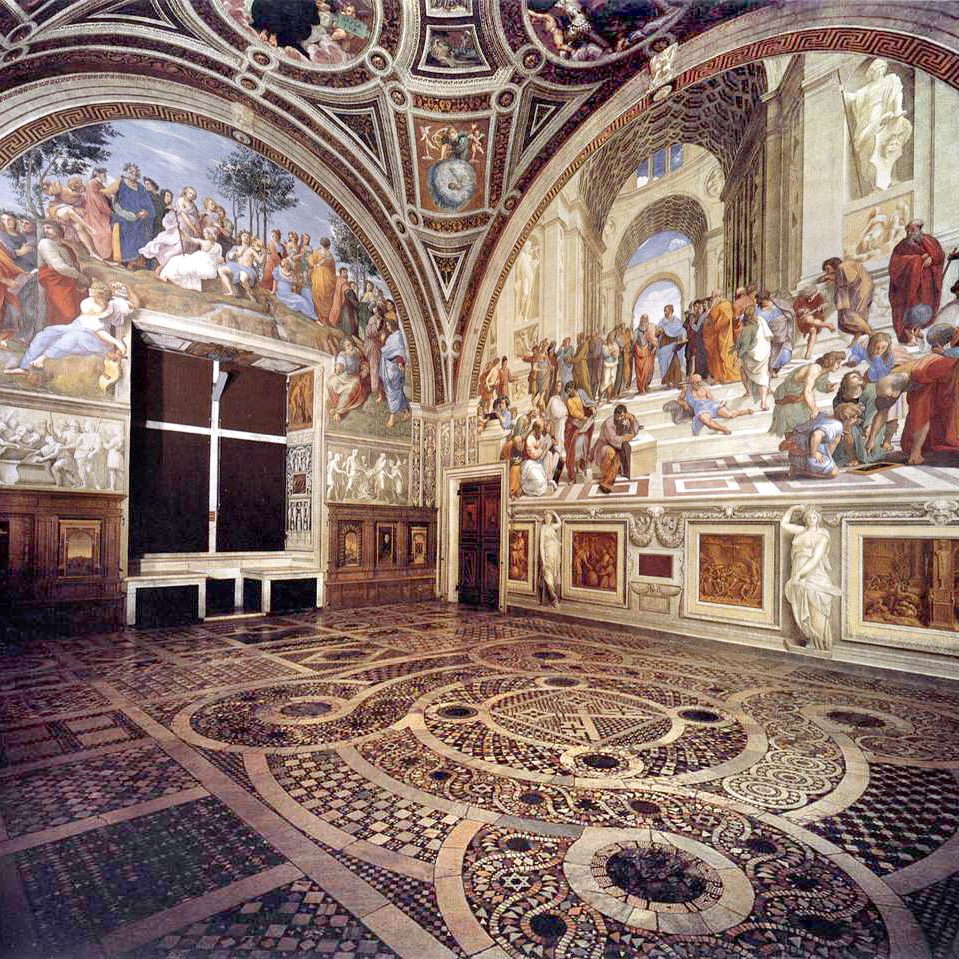
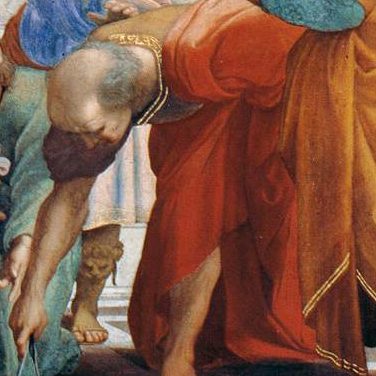
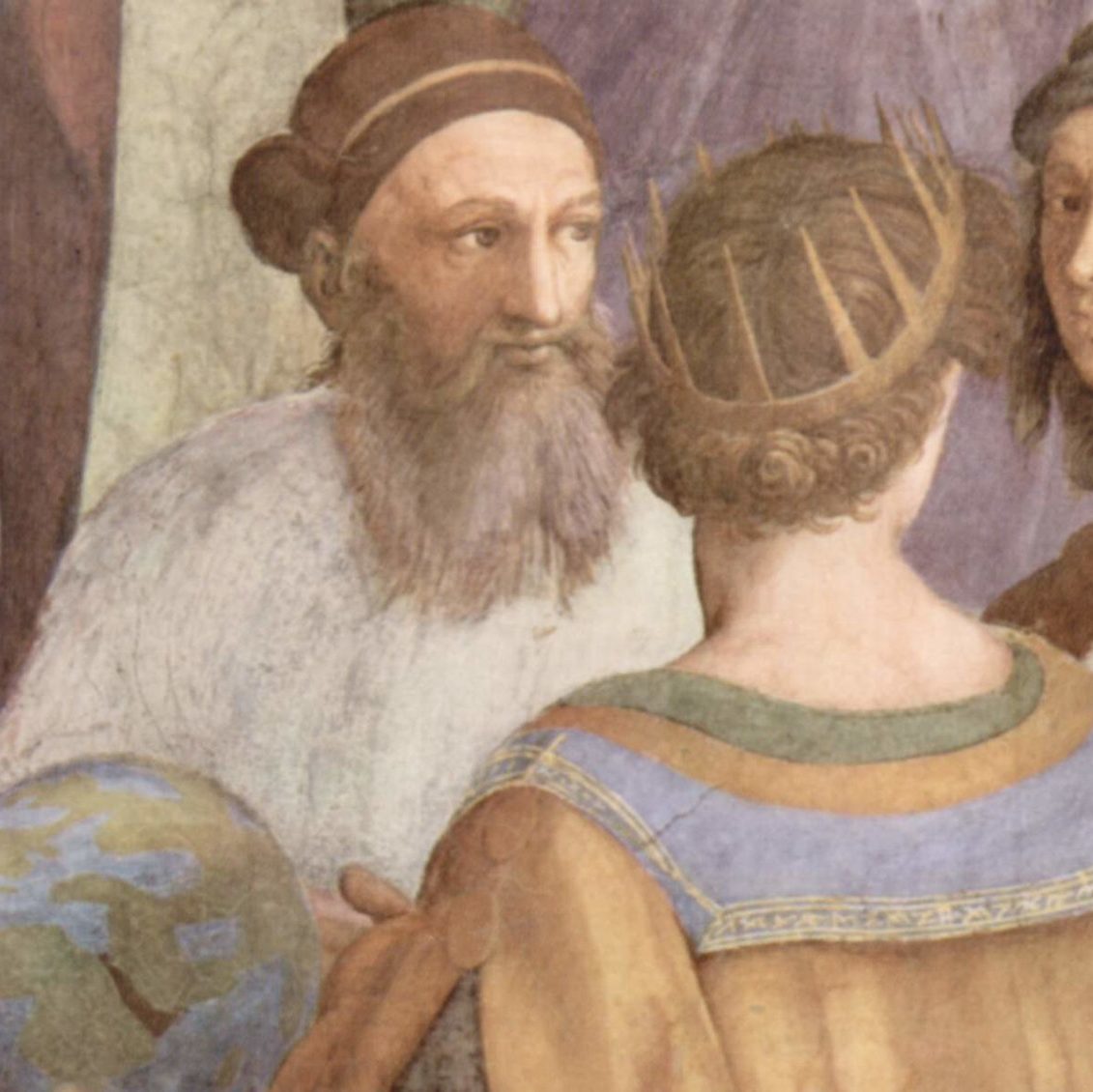
Commentators have suggested that nearly every great ancient Greek philosopher can be found in the painting, but determining which are depicted is speculative, since Raphael made no designations outside possible likenesses, and no contemporary documents explain the painting. Compounding the problem, Raphael had to invent a system of iconography to allude to various figures for whom there were no traditional visual types. For example, while the Socrates figure is immediately recognizable from Classical busts, one of the figures alleged to be Epicurus is far removed from his standard depiction.